American Sign Language Babies Series
Communication is key at an early age.
The American Sign Language Babies Series is a four-book board book series with signs for common words used in everyday communication with a baby or toddler.
By co-author and mom Tina Jo Breindel · Illustrated by Michael Carter
The Series
Four books. Each with 14 signs for everyday moments.
Each book focuses on everyday moments, with 14 signs and bright illustrations your baby will love.
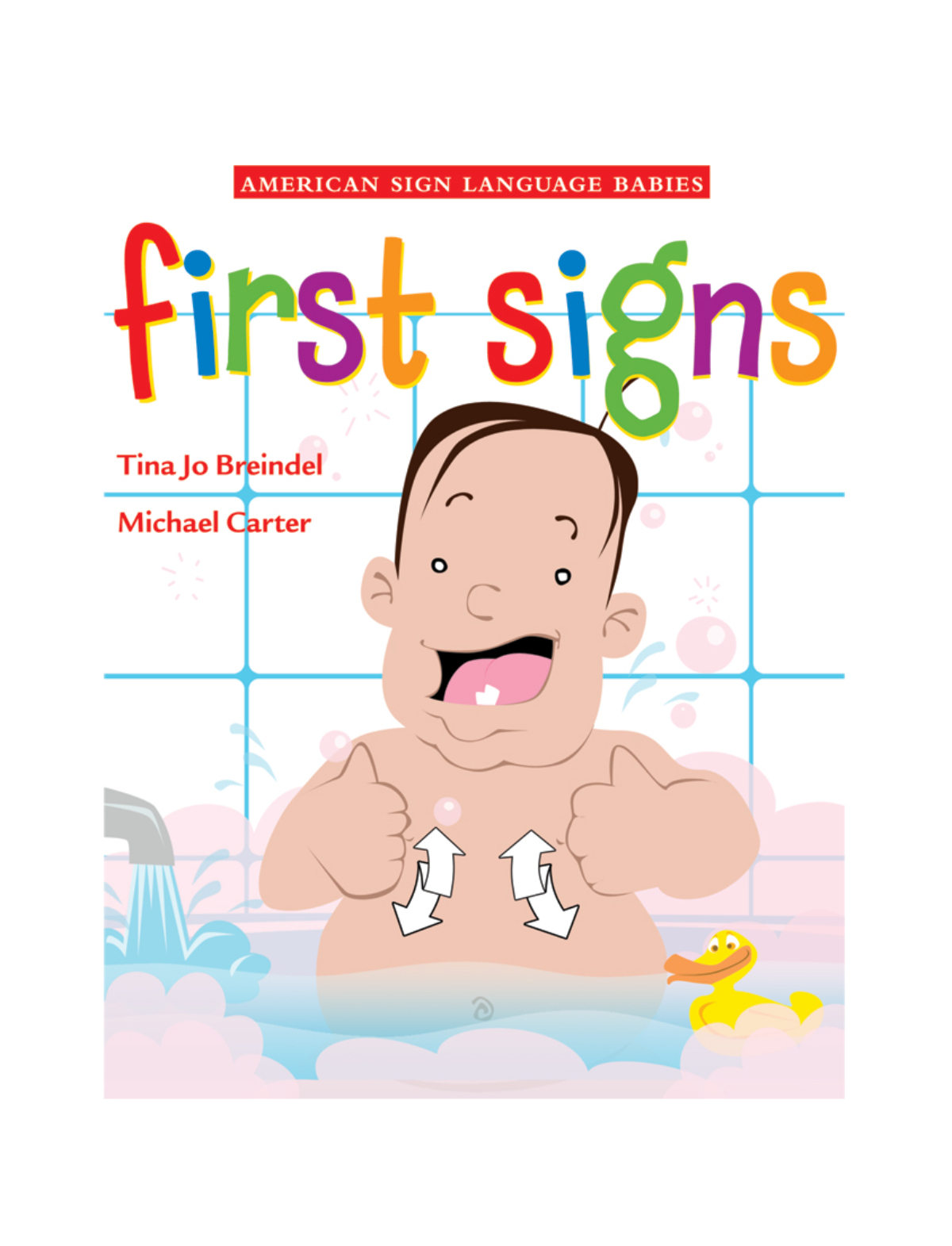 14 signs
First Signs
14 first words a toddler learns — mom, dad, baby, more, please, thank you, and more.
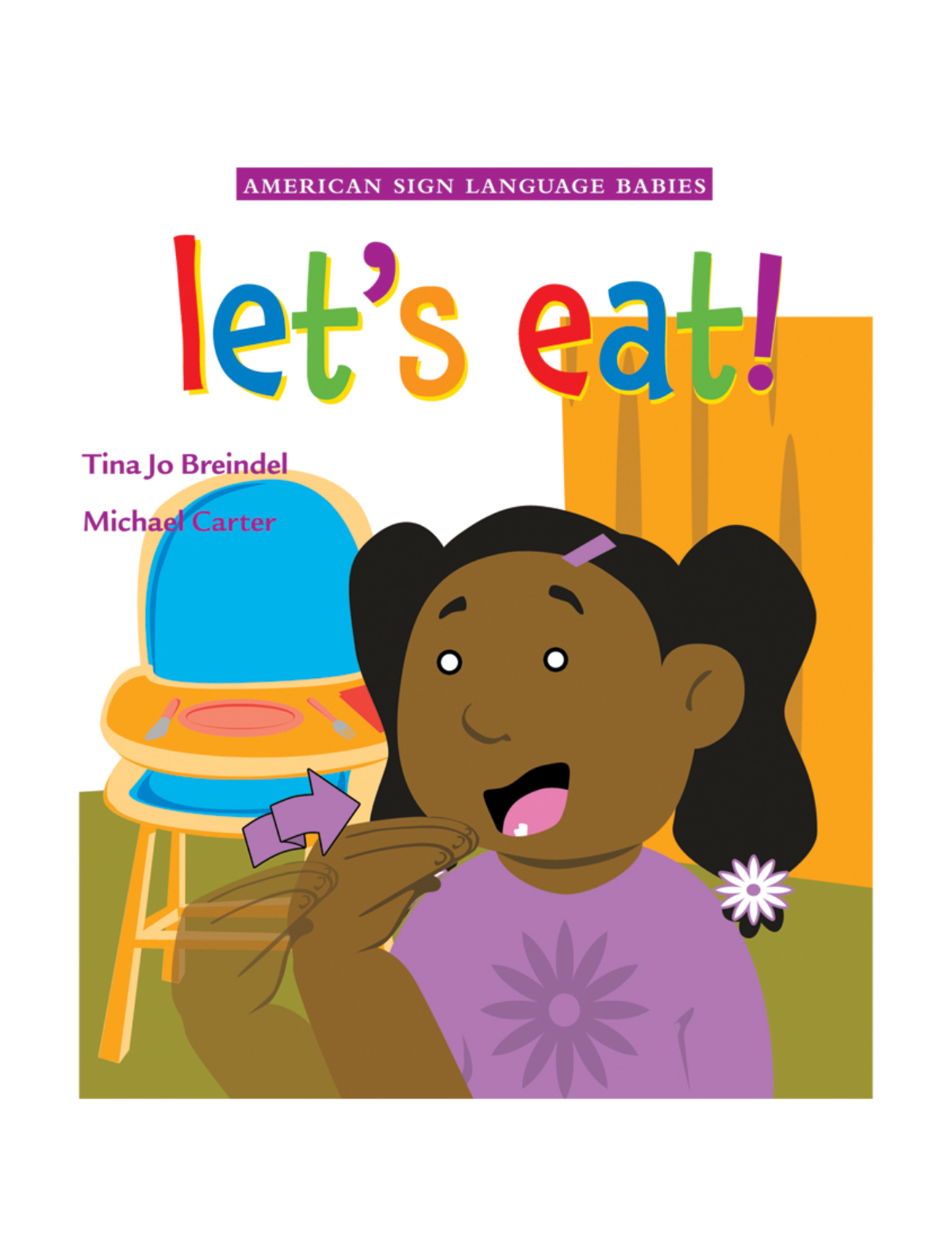 14 signs
Let's Eat
14 mealtime signs — apple, banana, hungry, cookie, and more.
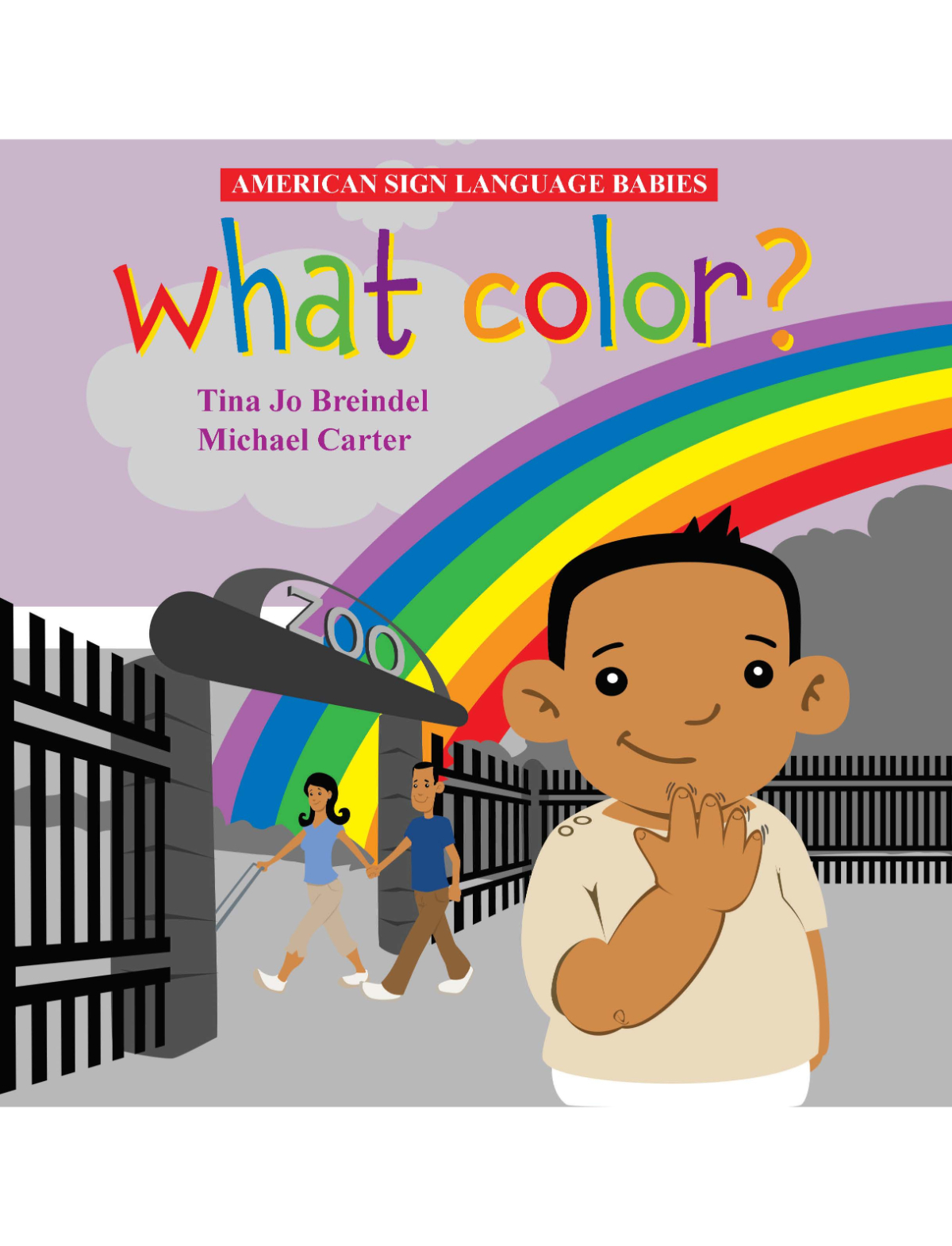 14 signs
What Color?
14 color signs — green, red, orange, and more.
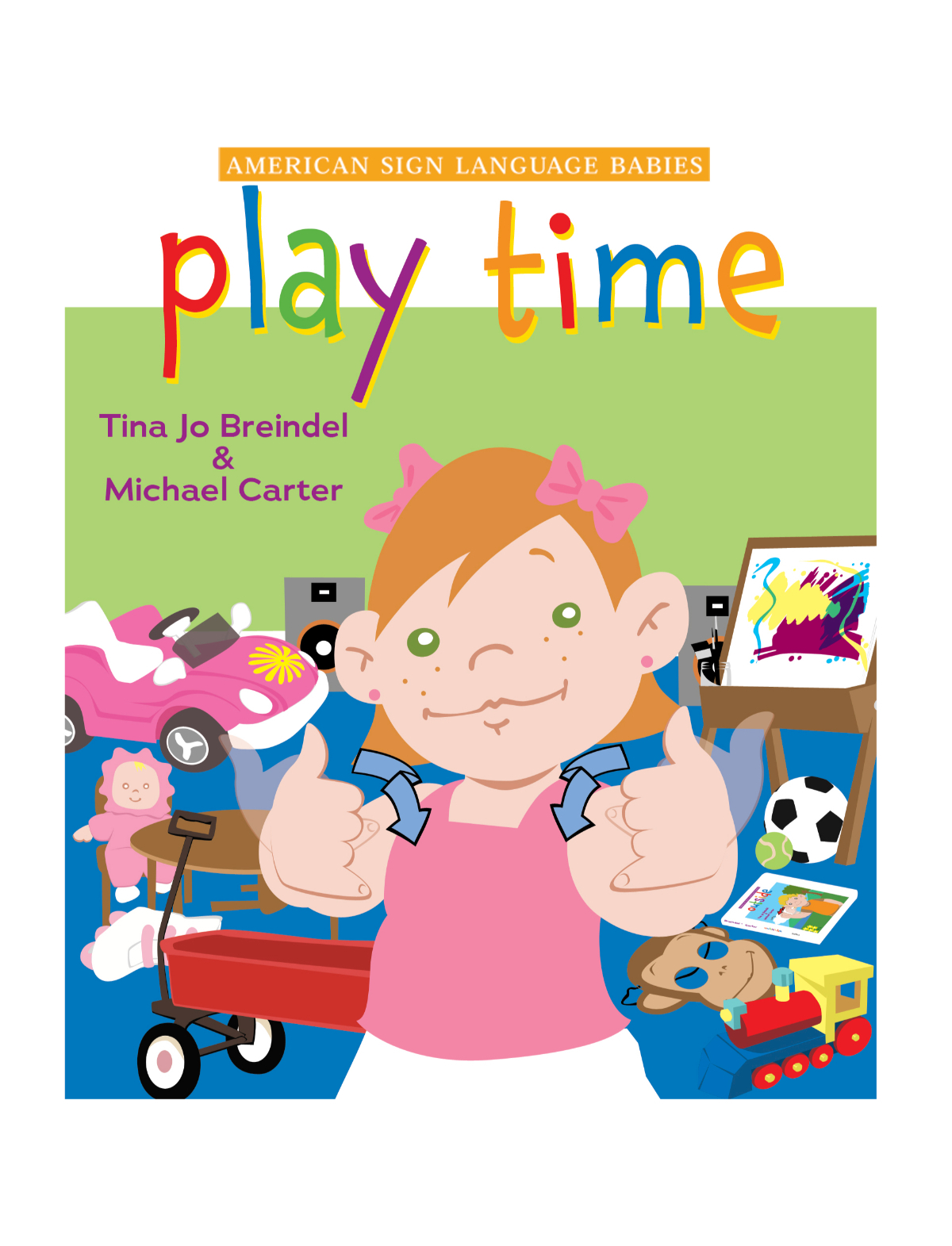 14 signs
Playtime
14 play and everyday signs — play, share, careful, and more.
The American Sign Language Babies Series
Four board books · 56 signs · Free companion videos. One price for the whole series.
Why Sign With Your Baby?
Signing with your babies brings many advantages.
Research shows babies can respond with signs as early as six months. Parents who sign report less frustration, stronger bonding, and earlier language development.
Earlier Bonding
Communicate with your baby before they can talk.
Less Frustration
Signs let babies express needs before they can speak.
Cognitive Benefits
Accelerates language comprehension and supports higher IQ.
Language Pathways
Signing helps build language pathways in the brain.
Getting Started
How to sign with your baby
Start whenever you're ready — even earlier than you think.
- 1
Start with a few signs
Begin with basic concepts like 'eat,' 'milk,' and 'hungry.' Gradually add more signs over time.
- 2
Repeat the sign often
Use the same signs at the same time every day. The more often you sign, the more likely your baby will sign too.
- 3
Wait for your baby to respond
It may not happen immediately, but eventually your baby will imitate the sign or answer with one of their own.
Understanding the Signs
How to Understand
All languages have building blocks that create words and sentences. ASL "words" are composed of building blocks called parameters. One sign is created from the combination of four parameters, which are handshape, palm orientation, movement, and location. When looking at a sign illustration, first identify how each of these elements contributes to the sign.
Handshape
There are approximately forty commonly used handshapes in ASL and many others that are seen occasionally. Many of the handshapes appear similar, but are in fact very specific.
Palm Orientation
Orientation of the hands, such as palm facing outward, palm facing inward, thumb side of the hand pointing up or down, is an important part of expressing a sign. Hold up your hands and experiment with the many ways you can position them.
Movement
Because ASL is a visually active language, the most difficult requirement of a drawing is to show movement. Arrows show the direction, path, and repetition of the movement. Some signs begin and end in the same location, while others change location from beginning to end and the sign illustration shows this.
Location
Understanding the location of a sign means that you know where to express the sign in relation to your body. Some signs are made near the chest, while others are made near the forehead or shoulder. Changing the location of a sign can change the meaning.
If you are able to identify and understand the four parameters of a sign, your ability to understand the drawings increases.
Since ASL and English do not correspond word-for-word, remember that the ASL sign matches the picture and the English word is a possible translation. This means both the sign and the English word are linked to the picture, but the sign and English word are not linked to each other. For example, HOT in the illustration from First Signs means steamy, scorching, or hot to the touch. The English word "hot" has numerous meanings that are not contained in this particular sign.
Now you have the information. Take the next step and see for yourself how enriching ASL can be to your baby's world!
Happy Signing!